What Vinegar Actually Cleans — and the Five Surfaces It Quietly Ruins
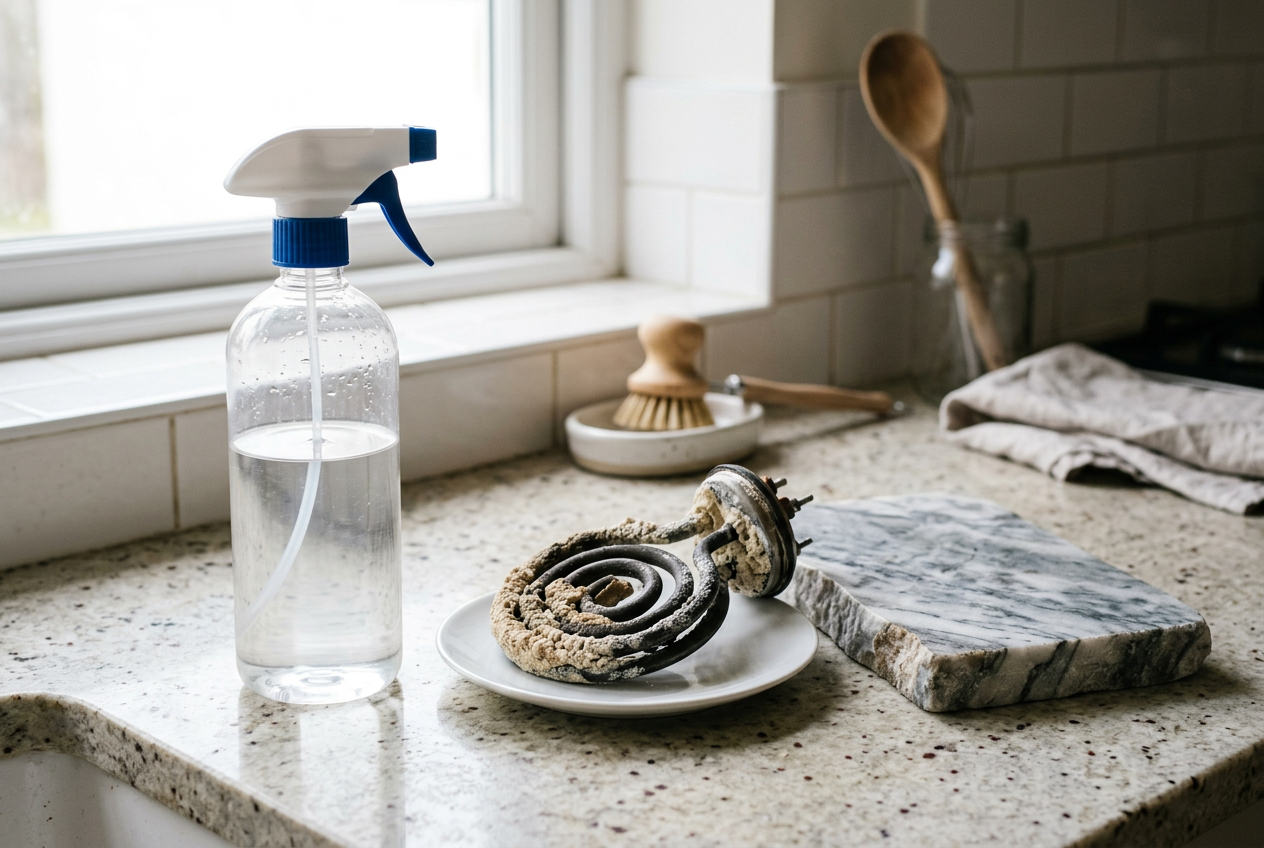
White vinegar has become the default answer to every cleaning question online, and that is a problem — not because it is bad, but because it is specific. Vinegar is roughly five percent acetic acid in water. That single property defines everything it can and cannot do, and most of the jobs people give it fall outside it.
Understanding the chemistry takes thirty seconds and saves a lot of wasted scrubbing, and in a few cases a worktop.
What the acid actually does
Acids dissolve alkaline mineral deposits. That is the whole mechanism. Limescale is calcium carbonate, an alkaline salt, and acetic acid converts it into calcium acetate, which is water-soluble and rinses away.
So vinegar excels at anything caused by hard water. Kettle scale, the crust at the base of a tap, blocked shower head nozzles, cloudy glassware, the film inside a dishwasher, mineral spotting on a stainless sink, and the white ring in a toilet bowl all respond to it.
It is also a mild deodoriser, because it neutralises alkaline odour compounds and evaporates as it dries. A bowl of vinegar in a room with a lingering smoke or cooking smell genuinely helps.
What it does not do
Vinegar is not a degreaser. Grease is not alkaline and acid does not break it down. Wiping a greasy hob with vinegar moves the grease around, which is why people conclude cleaning products are all the same.
It is not a reliable disinfectant either. At household strength it has some antibacterial effect in a laboratory, but it does not meet the standard for kitchen or bathroom sanitising and it does nothing meaningful against many common household pathogens. If you want a surface disinfected, use a product tested and labelled for it.
It does not remove burnt-on carbon, which needs soaking and abrasion. It does not lift protein stains, which need enzymes. And mixing it with bicarbonate of soda in a bowl produces an impressive fizz that leaves you with dilute sodium acetate — salty water. The two neutralise each other, so any cleaning power comes from the physical scrubbing you do afterwards.
The five surfaces to keep it away from
This is the part that matters most, because these mistakes are not reversible.
Natural stone. Marble, limestone, travertine and unsealed granite are largely calcium carbonate — the same material as limescale. Acid etches them, leaving a dull patch that no polishing at home will recover. That includes stone worktops, tiles and windowsills.
Grout and unsealed masonry. Cement-based grout is alkaline and degrades with repeated acid exposure, going powdery and crumbling at the edges over months.
Cast iron and carbon steel. Vinegar strips the seasoning from a pan and then attacks the metal itself, so a soaked pan can develop surface rust within a day.
Waxed, oiled and some sealed wood. The acid cuts through the finish, leaving lighter patches. On wooden worktops, use soapy water and re-oil instead.
Rubber seals and certain appliance components. Repeated neat vinegar hardens door gaskets in washing machines and dishwashers. Several manufacturers specifically warn against it, and a perished seal is an expensive lesson. Use a proper descaler or a dishwasher cleaner tablet for machines.
Also avoid it on electronic screens, where it can damage anti-glare coatings, and never mix it with bleach, which releases chlorine gas.
How to use it properly
Dilute for general work: one part vinegar to one part water in a spray bottle is plenty for glass, mirrors and tiles. Use it neat only for descaling.
Contact time does the work, not pressure. A spray that runs off a vertical tap in ten seconds achieves nothing. Soak a cloth or a strip of kitchen paper, wrap it around the deposit, and leave it thirty to sixty minutes.
Rinse afterwards. Residual acid keeps working slowly on grout and metal, and it attracts dust once dry.
For heavy descaling, citric acid powder is the better buy: stronger by weight, much cheaper by volume, no smell, and sold in most supermarkets and hardware shops for a few dollars a tub.
A short, honest list
Keep vinegar for kettles, shower heads, tap aerators, glassware, dishwasher glass, toilet limescale rings, windows and deodorising. Use dish soap for grease, bicarbonate of soda for carbon and scouring, an enzyme detergent for protein, and a labelled disinfectant when you actually need one to be disinfected.
Four products, four jobs, under twenty dollars total. That is a better cleaning cupboard than nine bottles of all-purpose spray, and far better than one bottle of vinegar being asked to do everything.
Is apple cider vinegar as good as white vinegar for cleaning?
No. It has similar acidity but it also contains sugars and pigments that leave a sticky residue and can stain light surfaces. Keep cider vinegar for cooking and buy the cheapest plain white distilled vinegar for cleaning.
Can I use vinegar in my washing machine instead of fabric conditioner?
Occasionally, and with caution. A small amount in the rinse does soften water and cut detergent residue, which helps stiff towels. Done in every wash, neat or in large quantities, it is associated with degraded door seals and hoses, and several manufacturers advise against it. A monthly hot maintenance wash with a proper machine cleaner is the safer routine.
Will vinegar kill mould in a bathroom?
It reduces some surface mould, but it does not reach the roots inside silicone sealant, which is where bathroom mould almost always lives. Black staining in a sealant joint means the sealant is colonised through its thickness — cut it out, dry the gap fully and re-seal with a fungicidal sanitary silicone. Then fix the ventilation, or it will return regardless of what you spray on it.