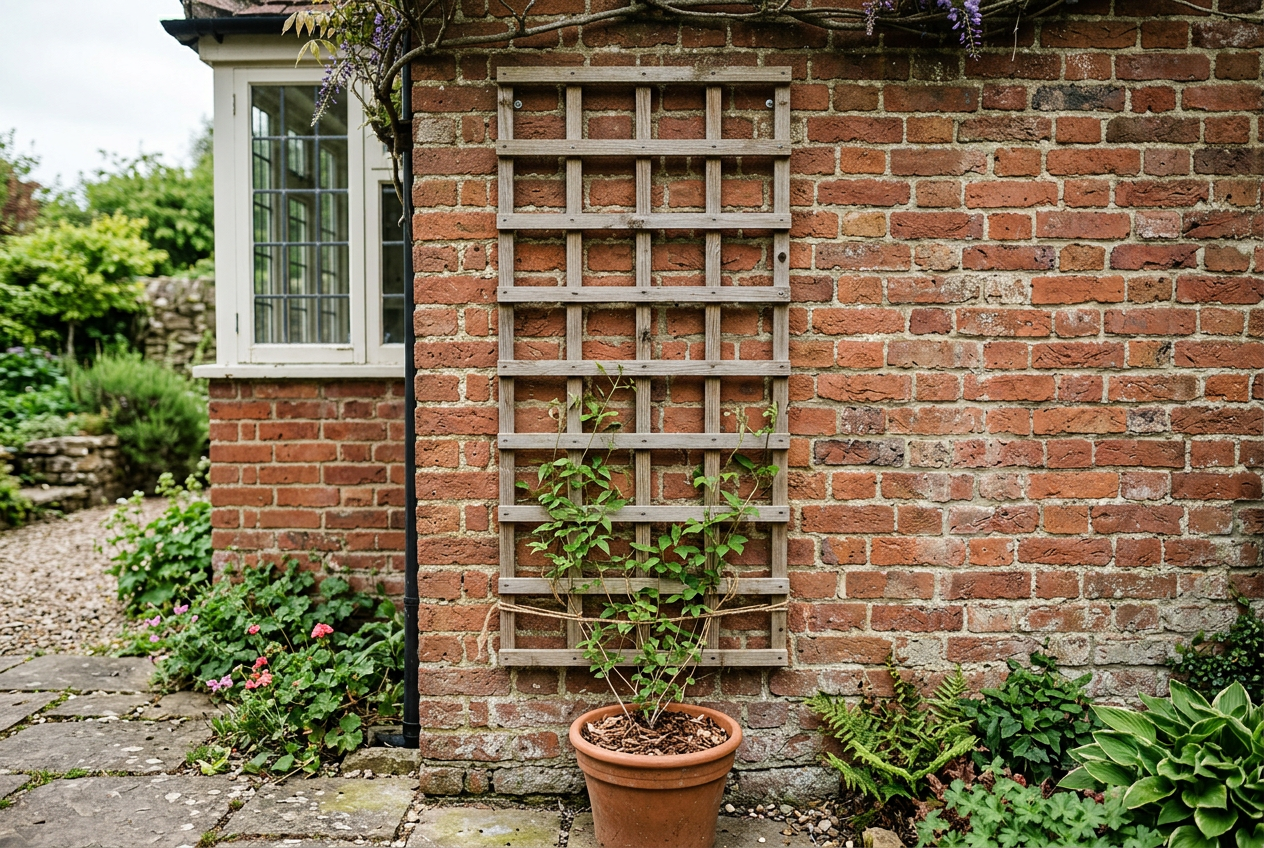
5. Get a climber onto the wall or fence
A small front garden has very little ground but a lot of vertical surface, and using it is what turns a flat frontage into something that feels established. Climbers also soften hard walls and hide bins, meters and downpipes.
Fix a trellis panel first, and hold it off the wall on battens so air circulates behind it and the plant has something to twine around. A 6 by 2 foot panel plus battens and fixings comes to about $35, CA$50 or £28. Use plugs rated for masonry, and stay well clear of any cables or meter boxes.
Choose by aspect, which matters more than anything else. A sunny wall takes a climbing rose, jasmine, clematis or a grapevine. A shady north or east wall takes climbing hydrangea, ivy, or the winter-flowering Clematis armandii. A fence you cannot drill takes annual sweet peas or a nasturtium on netting.
Plant about 18 inches out from the base of the wall, not tight against it, because the soil in that strip is dry and poor in the rain shadow of the house. Lean the plant toward the trellis, tie it in with soft twine, and water it generously in its first two summers — more young climbers die of drought at the wall base than of anything else.
Avoid the vigorous ones on a small house. Russian vine, wisteria on a low wall and ivy on old lime mortar all cause work or damage. And check any lease or covenant before attaching anything to a shared wall.
Two years of tying in and light pruning is all it takes to turn a bare wall into the best feature of the frontage.