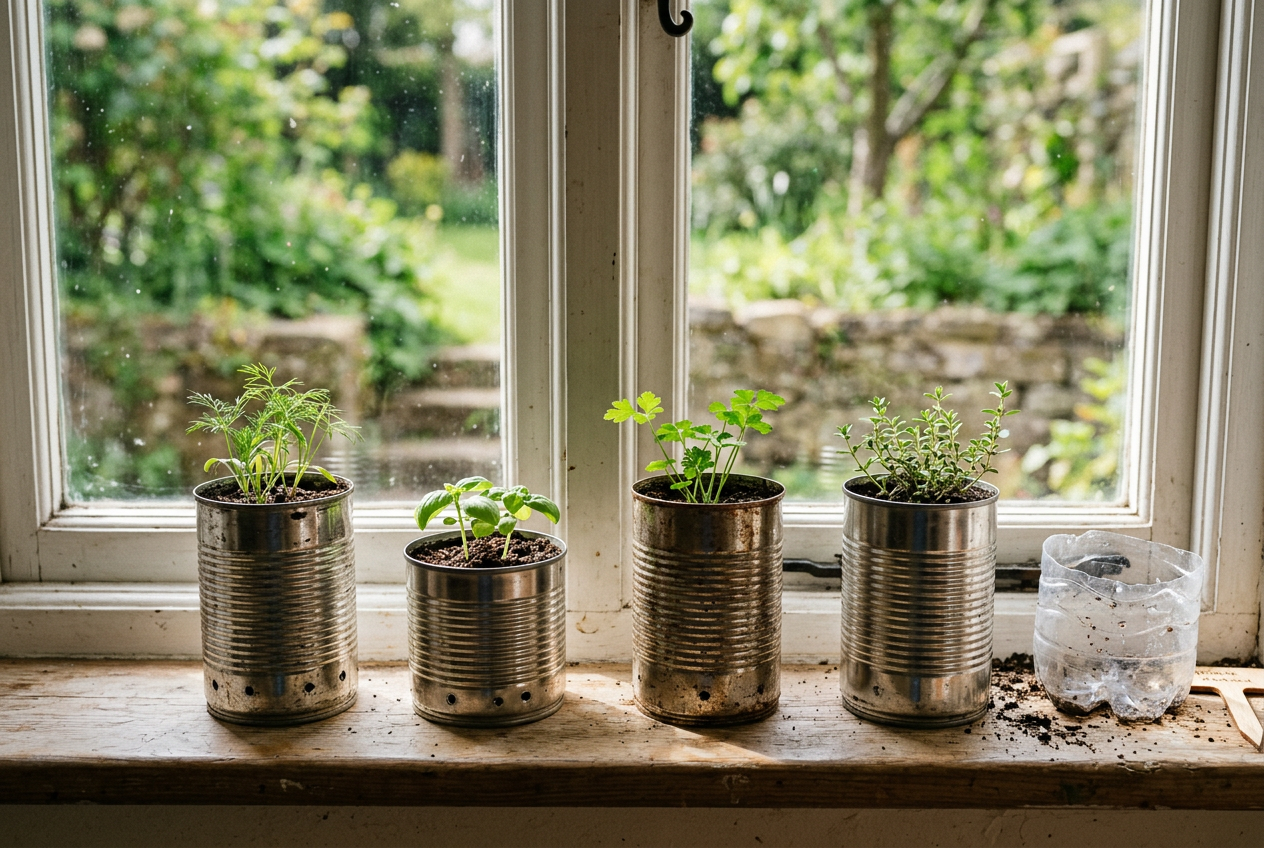
5. Tins, bottles and containers for the garden and the kitchen
Food tins, plastic bottles and takeaway containers all have obvious second lives, and unlike a lot of upcycling, these get used because they replace things you would otherwise buy repeatedly.
Tins make good seedling pots. Wash, remove the label, and punch three or four drainage holes in the base with a nail and hammer from the inside out so the sharp edges point downward. File or fold any sharp rim — a tin opener that leaves a smooth edge is worth owning for this alone. They are the right size for tomato, chilli and herb seedlings, and they look good enough for a windowsill.
Plastic bottles do several jobs. Cut in half, the top inverted into the bottom makes a self-watering propagator. Cut the bottom off and the whole thing becomes a cloche over a young plant to keep slugs off. Cut at an angle it becomes a scoop for compost, flour or pet food. With a pinhole in the cap and buried neck-down beside a tomato plant it becomes a slow-release waterer.
Takeaway containers stack, freeze and are ideal for batch portions you will not miss if someone keeps one. Wash them in the top rack only, since many warp in a hot bottom rack.
Some reuses to avoid. Do not reuse single-use plastic bottles for drinking water over long periods — the necks are hard to clean and they scratch. Do not use tins for anything acidic or for long food storage once opened, since the lining is only rated for the original contents. And do not grow food in containers that held paint, solvents, chemicals or engine oil, whatever their size.
Egg boxes for seed starting, wine corks as drawer bumpers and coffee grounds as a garden soil amendment all round out the same principle.