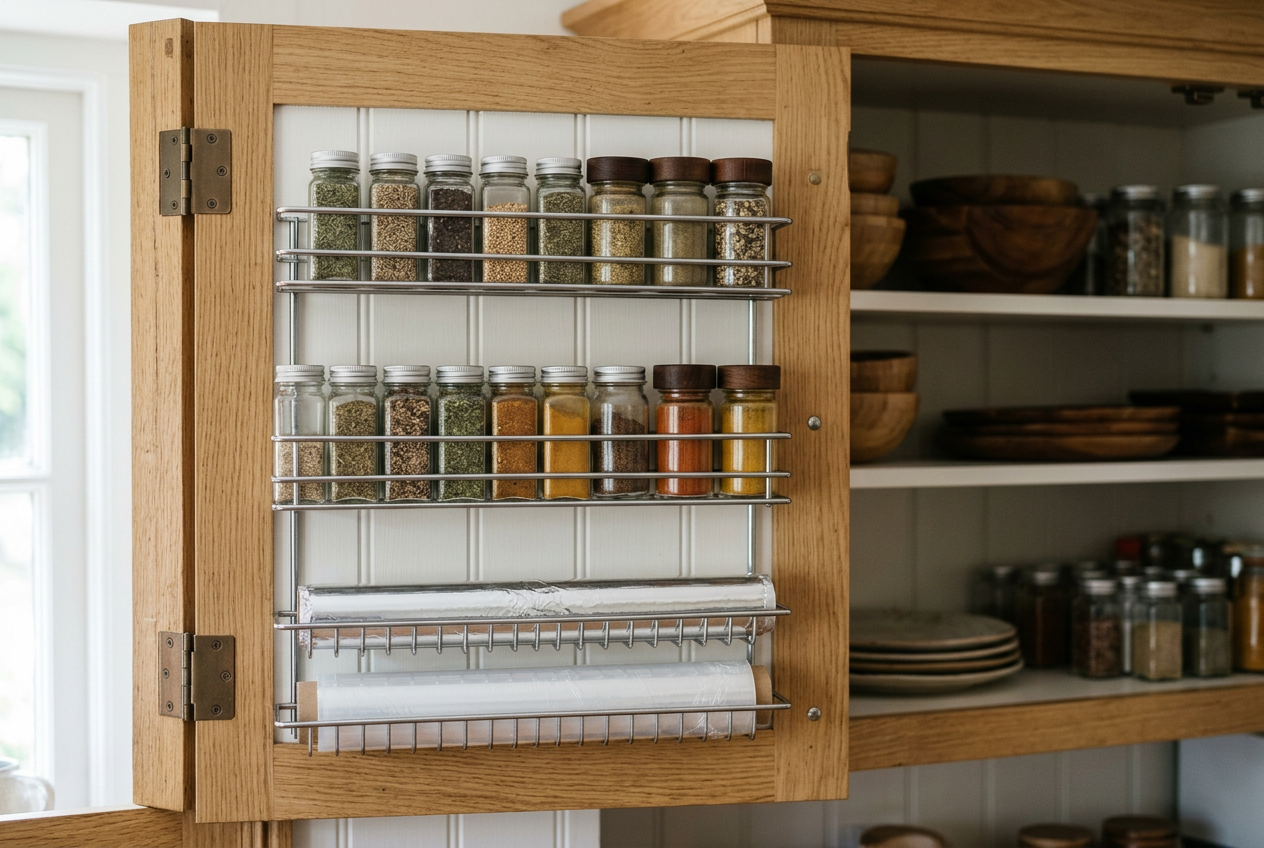
5. Use the door and the wasted vertical space
Two surfaces go unused in almost every food cupboard: the inside of the door, and the air between the top of your tallest item and the shelf above.
The door takes slim wire or plastic racks about 3 inches deep, screwed on or hung over the top edge. Check clearance first — the rack plus its contents must clear the shelf edges when the door closes, so measure the gap between the closed door and the front of the shelves. Doors suit spices, small jars, foil and cling film rolls, sachets, and stock cubes: light, small, frequently used things that get lost in a deep shelf.
Spices deserve particular attention because they are the worst offenders for duplication. Whatever you use — a door rack, a drawer insert with jars lying label-up, or a tiered riser — the rule is that every name must be readable without moving anything. Decant into matching small jars if you can face it, label the lids as well as the sides if they lie flat, and write the date you opened them, since ground spices lose most of their character after about a year.
For the vertical gap above shorter items, add a shelf riser or a stacking shelf that creates a second deck. Mugs, tins, packet mixes and small jars all sit happily on a half-height second level, and a single riser often adds a third more usable space to one shelf.
Finally, use the highest shelf for backstock and bulk — the spare bag of flour, the multipack of pasta — and never for anything you need weekly. Anything above eye level should be things you reach for monthly at most.